Painting Beaches
IN THIS LESSON
1. Building the Sky’s Mood
Learn how to blend warm, hazy light with cool cloud forms to create depth and atmosphere. Melissa shows how to shape clouds with soft edges and subtle color shifts so the sky feels alive but never overwhelming.
2. Painting Water That Feels Real… But Not Photographic
Explore how to layer tones of blue, teal, and gray to create waves that move and breathe. You’ll learn how to sculpt wave crests, implied motion, and the darker shapes beneath the surface — all without getting lost in details.
3. Capturing Shoreline Light
Melissa explains her method for painting wet sand, reflections, and that beautiful shimmering pathway where sky meets shoreline. You'll learn to balance warm and cool tones to achieve a luminous, peaceful effect.
4. Creating Harmony With Color
Learn Melissa’s color mixing approach — soft neutrals, gentle peach skies, harmonious blues — and how she achieves her signature calm, cohesive palette.

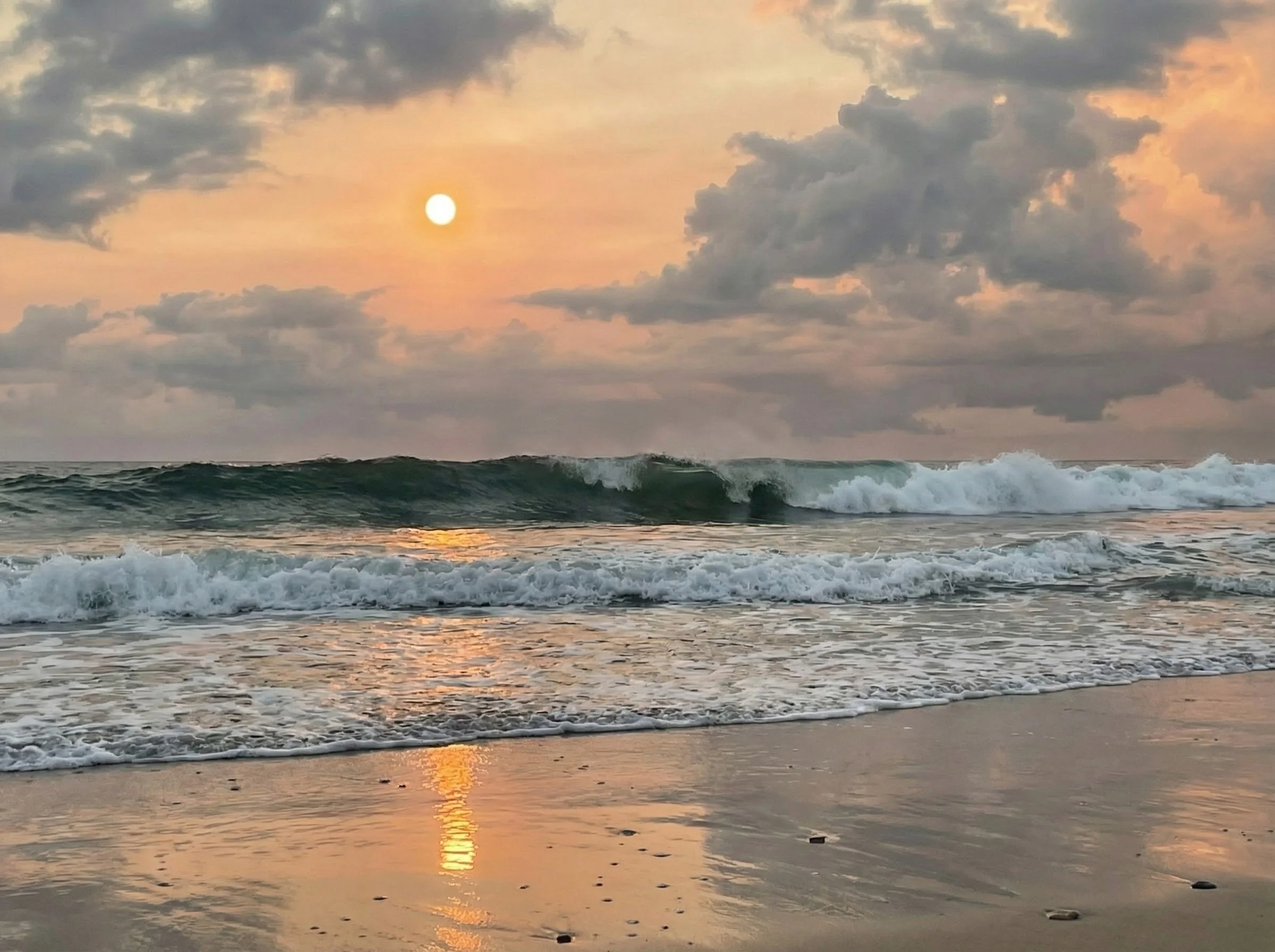
Find your inpiration .
Step 1 is to figure out what you what to create. For this course we’re focusing on the beach. My inspiration is this image.
Gather your supplies
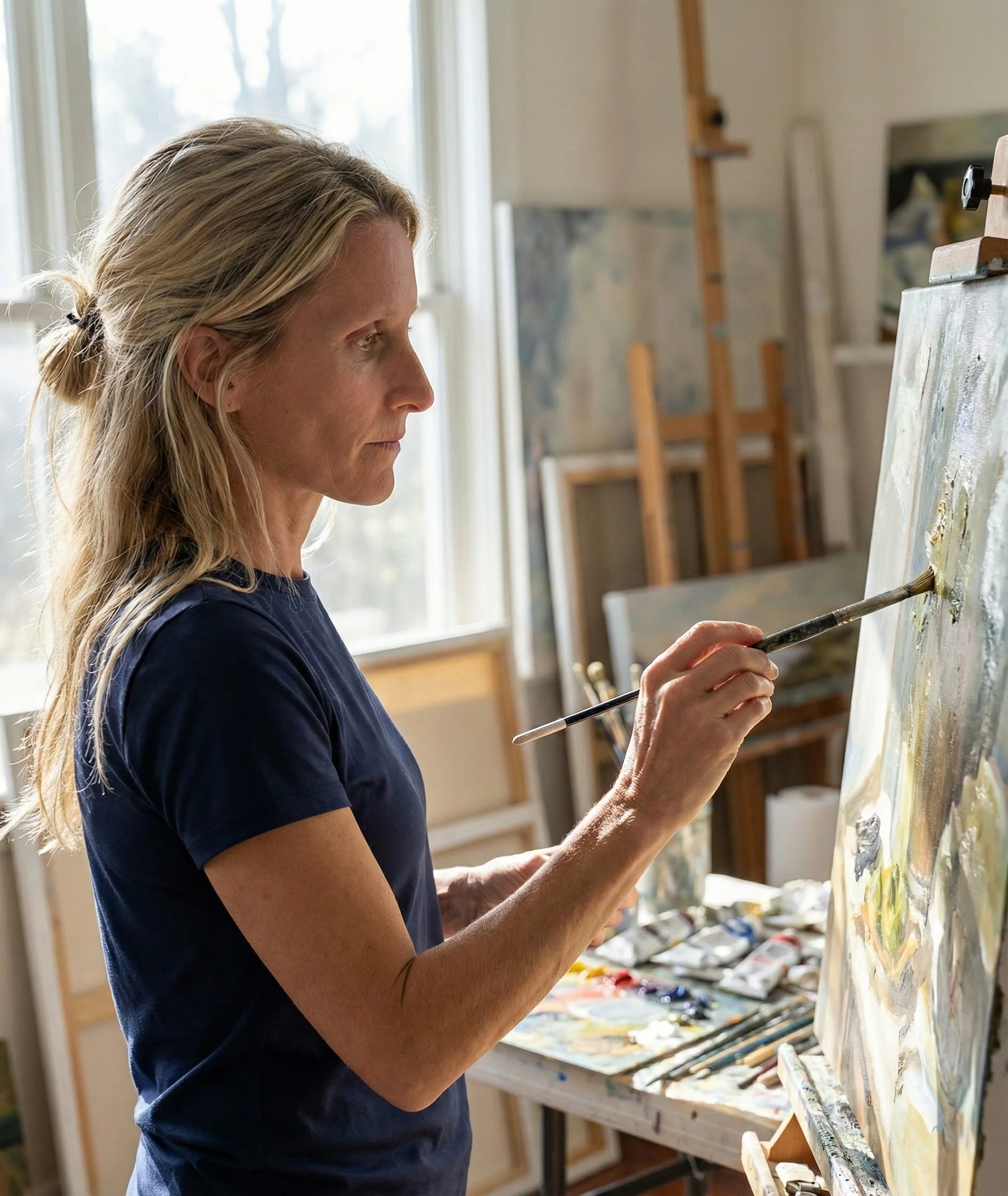
Before you begin, set yourself up with all the materials you’ll need: acrylic paints, a stretched canvas, a few flat and round brushes, a palette, water cup, paper towels, and a spray bottle. For this particular style, choose soft blues, peach tones, muted grays, and white. Having everything ready ensures you can work smoothly once the paint starts drying.
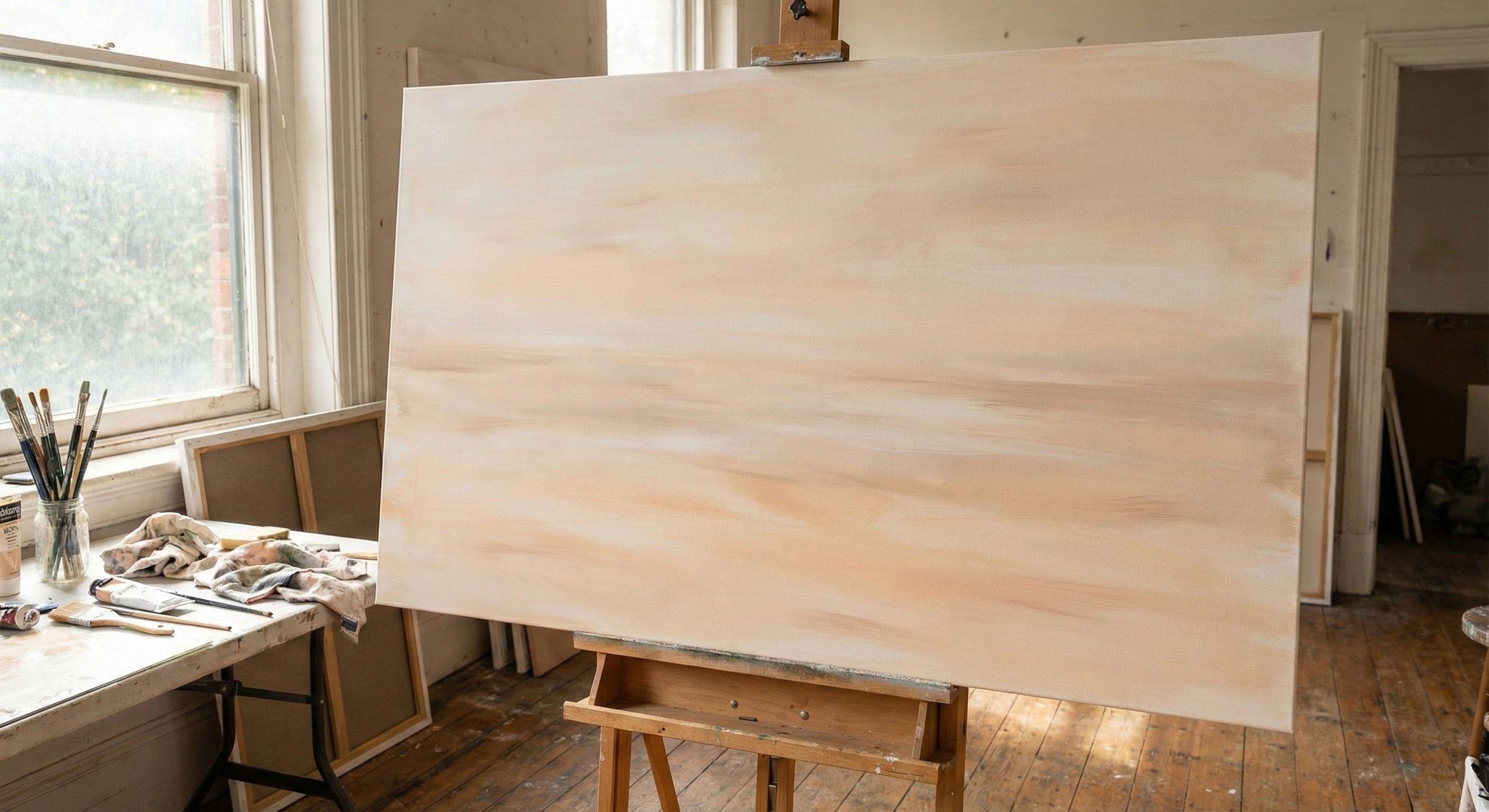
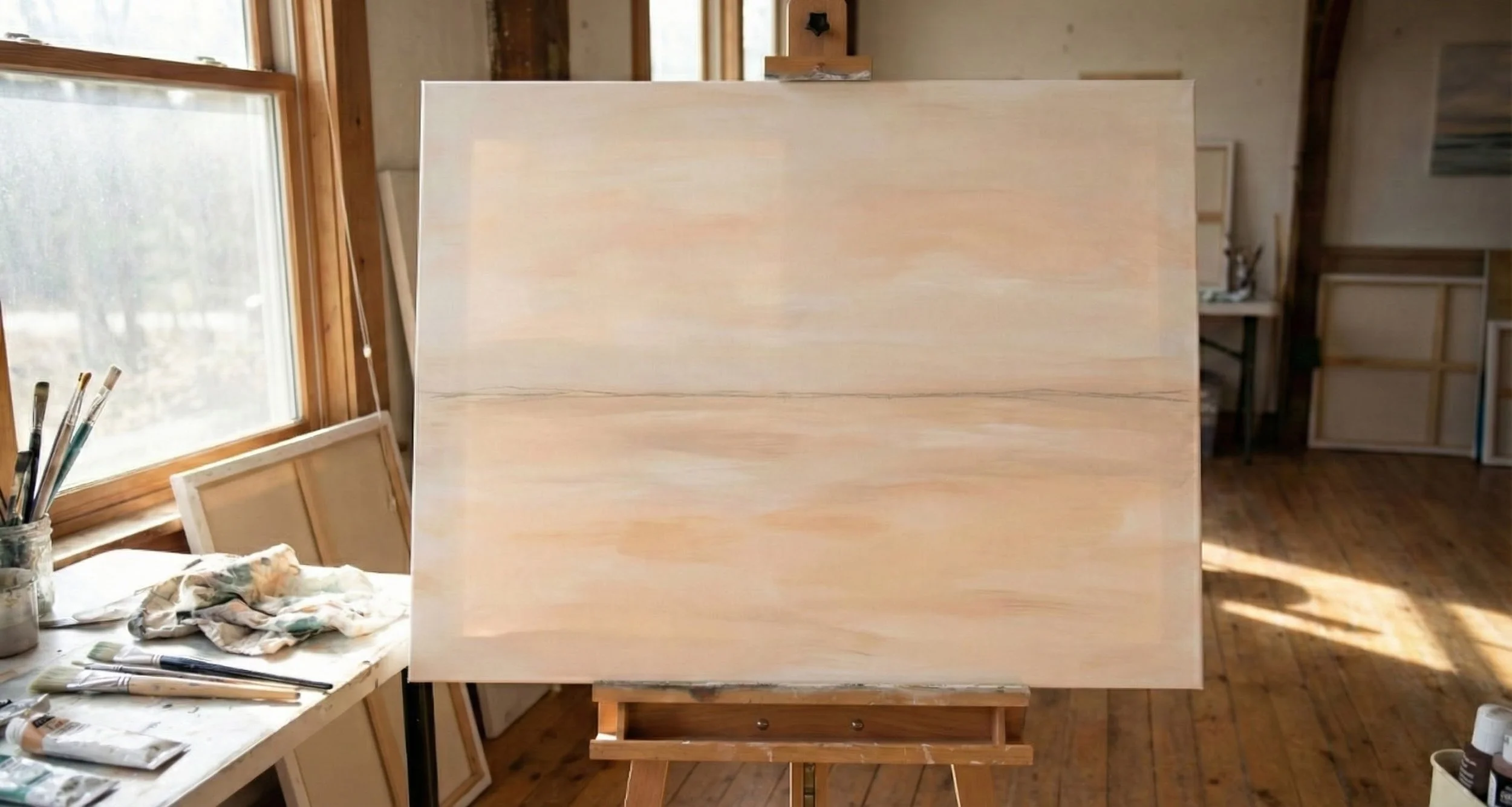
Start by lightly coating your canvas with a thin wash of diluted pale peach or beige. This gives the painting a warm undertone and helps unify the colors you’ll add later. Use horizontal strokes to mimic the natural softness of the sky and sand.
Prep the canvas
Sketch your horizontal line
Using a pencil or thinned paint, mark the horizon line about one-third down from the top. Keep it straight and soft—this line will anchor the composition and guide your placement of sky and water.
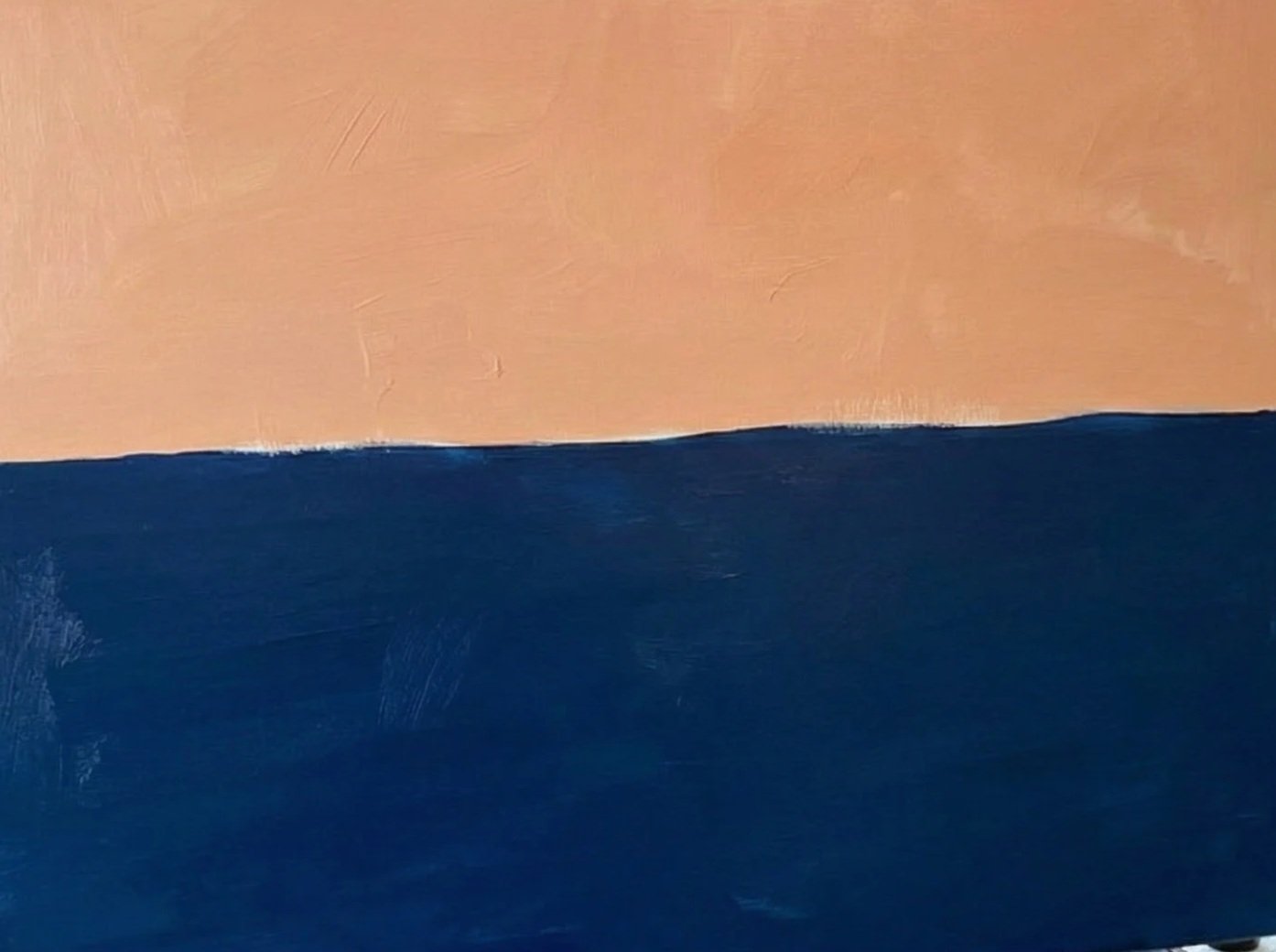
Split the water and sky
Separate the sky from the water in a rough color block of dark blue on the bottom and lite peach for the sunrise sky.
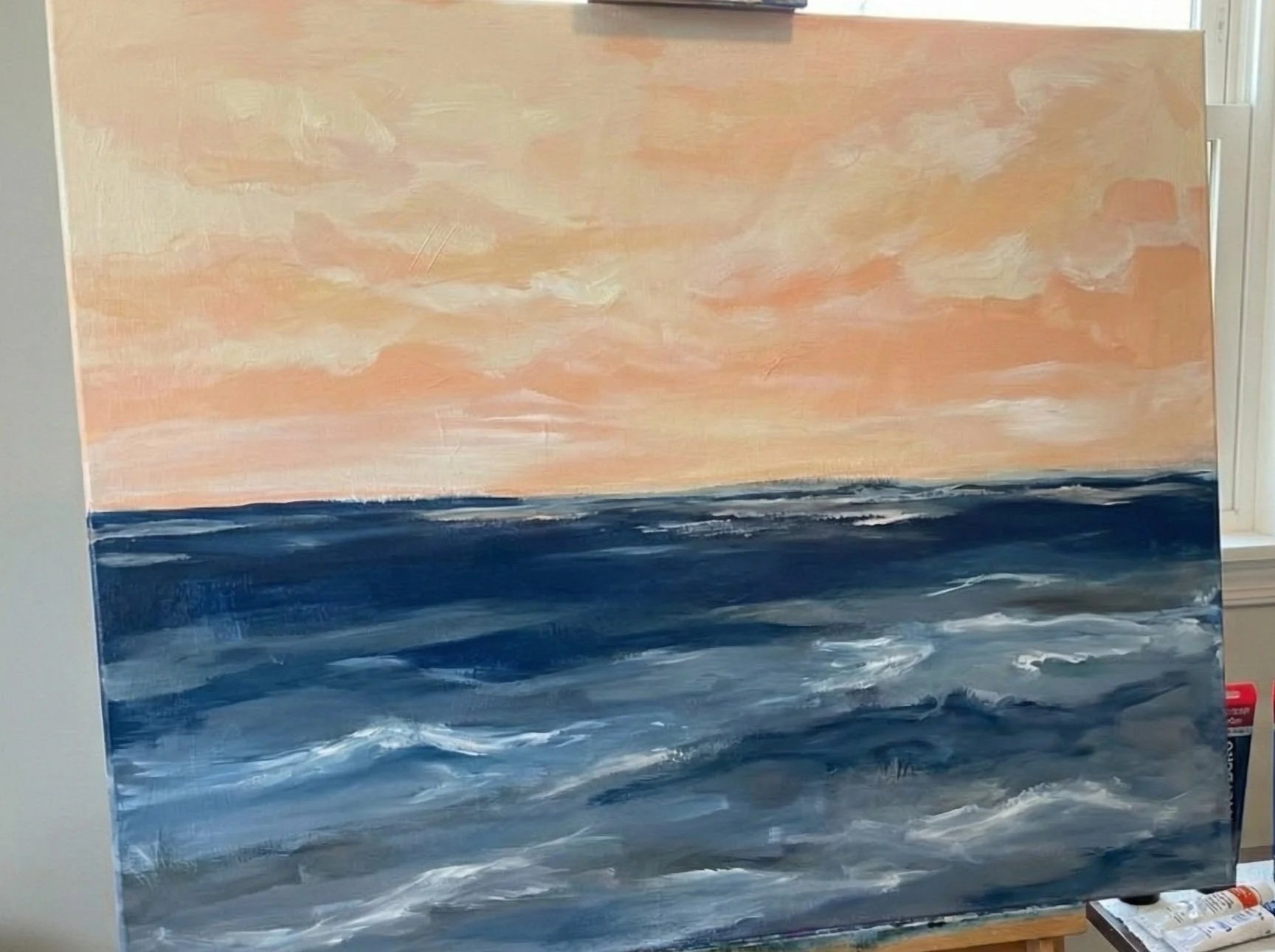
Add layers of color
Take a minute to create some darker and lighter versions of yor base colors by blending in blacks, whites and more base color to create a pallet of colors the work in harmony. Then, layer dark areas and light areas accordingly. Make rough shapes in light colors to build clouds and waves. More depth will come in next steps. For now, think big shapes and rough color blocking.
-
Add a short summary or a list of helpful resources here.